
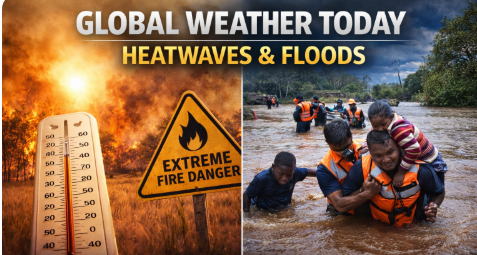
Weather patterns around the world today reflect a mix of extreme heat in some regions and hazardous rainfall in others, underscoring how dynamic conditions remain as we move deeper into the year.
In Southeast Australia, meteorological agencies have issued high fire-risk warnings as an intense heatwave builds. Temperatures are forecast to soar for several days, with inland areas possibly exceeding 40–48 °C, while fire danger levels remain high or catastrophic across parts of South Australia and Victoria. The extreme heat follows a year of record-high temperatures in 2025, attributed to broader global warming trends.
At the same time in southern Africa, widespread flooding continues to generate life-threatening situations. Torrential rains have inundated parts of South Africa, Mozambique, and Zimbabwe, displacing hundreds of thousands, causing loss of life, and damaging critical infrastructure. Emergency services are actively rescuing isolated communities and responding to ongoing flood threats brought by persistent low-pressure systems.
In northeastern South Africa and adjacent regions of Mozambique, heavy rainfall has overwhelmed rivers and flood defences, forcing evacuations and prompting high-level warnings. Local authorities continue to anticipate more rain in the coming days, with saturated soil and swelling waterways posing continued risk to populations and agriculture.
Even as these severe weather conditions unfold, some parts of the Northern Hemisphere are experiencing more moderate and mixed weather. For example, recent forecasts show areas in parts of Spain shifting from rain in the morning toward clearer skies later in the day, as temperatures stay mild and breezes persist — a reminder that weather varies greatly even within the same broad region.
What These Patterns Tell Us Today
Overall, today’s weather narrative blends extreme heat and ongoing flood risks — a dual reality that many regions across the globe are facing. The extreme temperature spikes in Australia reflect a continuation of the long-term warming trend, with scientists noting that years like 2025 have been among the warmest on record, even when natural cooling patterns like La Niña are present.
Meanwhile, heavy rainfall and flood dangers in southern Africa highlight how atmospheric conditions can deliver intense precipitation over extended periods, overwhelming infrastructure and emergency services. The contrast between these heat-dominated and rain-dominated regions today illustrates how diverse and impactful weather systems can be simultaneously.
Weather Tips for Readers
- Heatwave preparedness: In regions facing extreme heat — like parts of Australia — reduce outdoor exposure during peak midday hours, stay hydrated, and follow local fire-danger advisories from official meteorological services.
- Flood safety: Where flooding is affecting travel or homes, avoid walking or driving through floodwaters, and heed evacuation guidance from authorities.
- Local forecasting: Weather can change quickly; check your local weather service for updated forecasts specific to your city or region.
Last Updated on: Friday, January 23, 2026 12:51 pm by BUSINESS SAGA TEAM | Published by: BUSINESS SAGA TEAM on Friday, January 23, 2026 12:51 pm | News Categories: Business Saga News, Latest News, Trending News
About The Author


Leave a Reply