
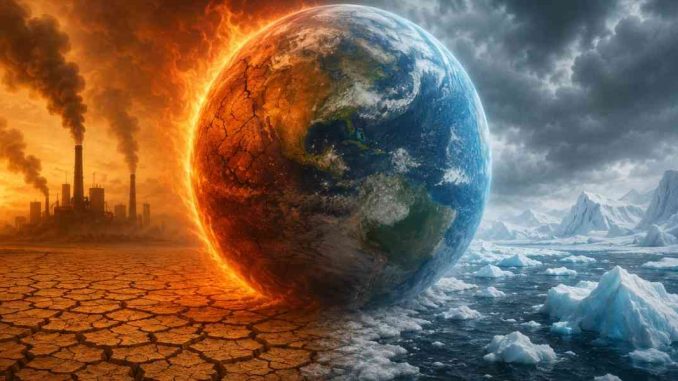
Climate scientists across the world are raising alarms that the coming year could witness severe environmental disruptions as the global warming warning 2026 grows stronger. Researchers say rising temperatures, extreme weather events, and weakening political focus on climate issues may combine to make 2026 one of the most dangerous years yet for the planet.
The warning comes at a time when economic uncertainty, geopolitical conflicts, and energy crises have pushed climate action lower on the global priority list.
Experts fear that reduced urgency around environmental policies could worsen the long-term effects of global warming.
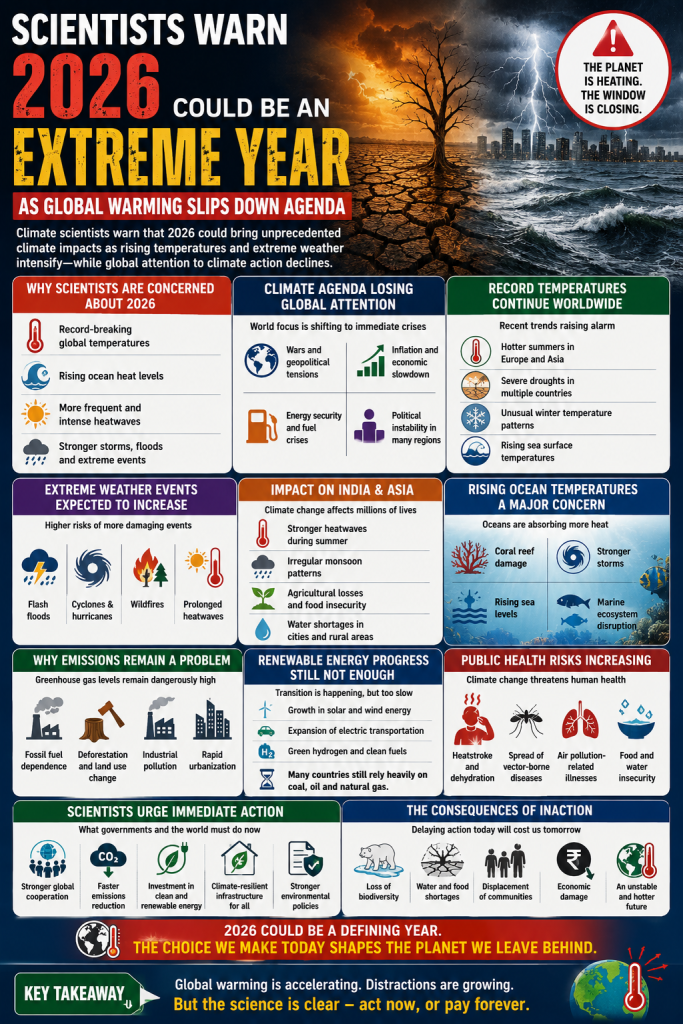
Why Scientists Are Concerned About 2026
The latest global warming warning 2026 is based on multiple climate indicators showing accelerating environmental stress.
Scientists point to:
- Record-breaking global temperatures
- Rising ocean heat levels
- Increased frequency of heatwaves
- More intense storms and floods
Climate experts believe these factors may intensify further if emissions continue rising without stronger international action.
Climate Agenda Losing Global Attention
A major reason behind the global warming warning 2026 is concern that governments worldwide are becoming distracted by other crises.
Global attention has increasingly shifted toward:
- Wars and geopolitical tensions
- Inflation and economic slowdown
- Energy security concerns
- Political instability in several regions
As a result, climate goals that once dominated international discussions are receiving less immediate focus.
Record Temperatures Continue Worldwide
The global warming warning 2026 follows several years of historic temperature records across continents.
Scientists say recent trends include:
- Hotter summers in Europe and Asia
- Severe droughts in multiple countries
- Unusual winter temperature patterns
- Rising sea surface temperatures
These conditions are already affecting agriculture, public health, and water supplies worldwide.
Extreme Weather Events Expected to Increase
One of the biggest concerns in the global warming warning 2026 is the growing intensity of extreme weather.
Experts predict higher risks of:
- Flash floods
- Cyclones and hurricanes
- Wildfires
- Prolonged heatwaves
Many climate researchers believe vulnerable countries may face severe humanitarian and economic consequences if preparedness remains weak.
Impact on India and Asia
The global warming warning 2026 is especially important for countries like India, where climate-sensitive sectors support millions of people.
Potential impacts include:
- Stronger heatwaves during summer
- Irregular monsoon patterns
- Agricultural losses
- Water shortages in urban regions
Experts warn that densely populated nations could face major challenges if climate adaptation efforts do not accelerate.
Rising Ocean Temperatures a Major Concern
Scientists behind the global warming warning 2026 say oceans are absorbing massive amounts of heat.
This has contributed to:
- Coral reef damage
- Stronger storms
- Marine ecosystem disruption
- Rising sea levels
Ocean warming is now considered one of the clearest indicators of long-term climate imbalance.
Why Emissions Remain a Problem
Despite years of climate conferences, the global warming warning 2026 highlights that greenhouse gas emissions remain dangerously high.
Key contributors include:
- Fossil fuel dependence
- Industrial pollution
- Deforestation
- Rapid urbanization
Experts argue that global emissions must decline sharply within this decade to avoid more severe warming.
Renewable Energy Progress Still Not Enough
Although renewable energy expansion continues, scientists behind the global warming warning 2026 believe the transition remains too slow.
Countries are investing in:
- Solar power
- Wind energy
- Electric transportation
- Green hydrogen projects
However, many nations still rely heavily on coal, oil, and natural gas for economic stability.
Public Health Risks Increasing
The global warming warning 2026 also carries major public health implications.
Climate-related risks include:
- Heatstroke and dehydration
- Spread of vector-borne diseases
- Air pollution-related illnesses
- Food and water insecurity
Health experts warn that vulnerable populations may suffer the most from worsening environmental conditions.
Scientists Urge Immediate Action
Climate researchers issuing the global warming warning 2026 are calling for stronger global cooperation.
Recommended actions include:
- Faster emissions reduction
- Investment in clean energy
- Climate-resilient infrastructure
- Stronger environmental policies
Scientists stress that delays today could result in far more severe consequences later.
Conclusion
The growing global warming warning 2026 reflects mounting concern among scientists that climate risks are accelerating while global focus is fading. With rising temperatures, extreme weather events, and environmental instability already affecting millions, experts believe the coming year could become a defining moment in the climate crisis.
As governments balance economic and geopolitical challenges, researchers warn that ignoring climate action now may lead to far greater human, environmental, and economic costs in the future.
Also read: Mother’s Day 2026: Thoughtful Gift Ideas & Ways to Make Your Mom Feel Special
Add Business Saga as a preferred source on Google- Click Here
Last Updated on: Thursday, May 14, 2026 3:22 pm by Lakshmi Tejasri | Published by: Lakshmi Tejasri on Thursday, May 14, 2026 2:58 pm | News Categories: Lifestyle News
About The Author

Leave a Reply