
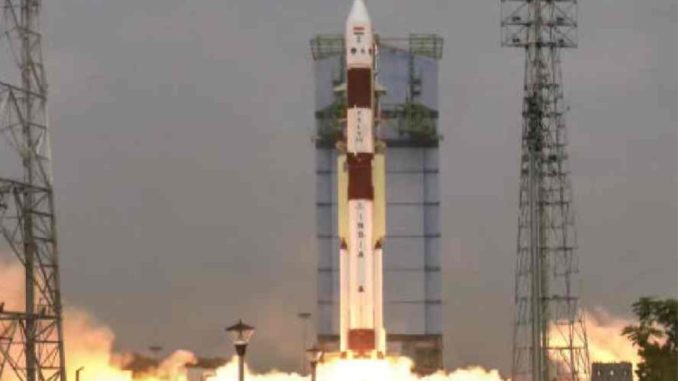
PSLV-C62 launch anomaly marked a rare setback for India’s space programme, as the ISRO confirmed that the mission encountered a technical issue, prompting a detailed failure analysis. The Polar Satellite Launch Vehicle, widely regarded for its reliability, deviated from its planned mission sequence shortly after lift-off, drawing attention from space experts and enthusiasts across the country. While ISRO has confirmed that the mission objectives were not fully achieved, officials emphasized that comprehensive data is being examined to identify the root cause. The PSLV-C62 launch anomaly has now become a major talking point, as the findings are expected to play a crucial role in strengthening future Indian space missions.
PSLV-C62 Launch Anomaly Leads to Loss of Defence and Commercial Satellites
NEW DELHI: The launch anomaly involving ISRO’s PSLV-C62 rocket, which deviated from its planned flight path during Monday’s mission, has dealt a significant blow to multiple stakeholders. The failure resulted in the loss of the EOS-N1 (Anvesha) defence satellite and affected several Indian and foreign institutions, start-ups, and private companies. In total, 15 satellites carrying advanced technologies could not be placed into their intended sun-synchronous orbit at 512 km.
Commenting on the setback after the launch from the Sriharikota spaceport, ISRO Chairman V. Narayanan said, “The mission progressed as expected until the later stages. The four-stage PSLV performed normally up to a point close to the third stage, after which the anomaly occurred.” He added that ISRO has initiated a detailed failure analysis to determine the exact cause.
What Went Wrong? Understanding the PSLV-C62 Launch Anomal
Early details released by ISRO suggest that the PSLV-C62 launch anomaly surfaced during the later part of the mission, after the rocket had already cleared its initial flight phases. The Polar Satellite Launch Vehicle follows a carefully sequenced four-stage design, using alternating solid and liquid propulsion to maintain accuracy as it climbs toward orbit.
According to ISRO officials, everything progressed as planned until the mission reached a point close to the third-stage operation. It was after this phase that the vehicle began to drift from its intended flight path, making it impossible to place the EOS-N1 (Anvesha) satellite and the accompanying payloads into their designated orbit. In missions aimed at sun-synchronous orbits, even a slight deviation in speed or direction can have serious consequences. Engineers are now examining flight data, sensor readings, and propulsion behaviour in detail to understand exactly where the sequence diverged from expectations.
PSLV-C62 Mission Timeline: How the Launch Unfolded
Mission: PSLV-C62 / EOS-N1 (Anvesha)
Launch Location: Sriharikota Spaceport
Intended Orbit: Sun-synchronous orbit at 512 km
- Lift-off: PSLV-C62 took off from Sriharikota as scheduled
- First Stage: Solid motor and twin strap-ons functioned normally
- Second Stage: Liquid propulsion phase proceeded as expected
- Third Stage: Initial performance remained within predicted limits
- Later Phase: Deviation from the planned trajectory was observed
- Result: Satellites could not be placed into orbit
- Aftermath: ISRO initiated a detailed technical review
The sequence shows that the mission remained stable through its early stages before the anomaly altered the vehicle’s flight path.
Conclusion: ISRO Looks Ahead After PSLV-C62 Setback
While the PSLV-C62 mission did not achieve its objectives, ISRO has made it clear that the focus is now on learning and recovery. The space agency has begun a thorough failure analysis, drawing on telemetry and onboard data to identify the precise cause of the anomaly.
ISRO officials have stressed that such reviews have, in the past, played a key role in improving the reliability of India’s launch vehicles. With several missions lined up in the coming months, the lessons from PSLV-C62 are expected to feed directly into future launches. Despite this rare setback, ISRO remains confident of returning stronger, reinforcing its reputation as one of the world’s most dependable space agencies.
Also read: Barcelona vs Athletic Club Highlights: Flick’s 5-Goal Masterclass Secures Super Cup Final Spot
Add Business Saga as a preferred source on Google – Click Here
Last Updated on: Tuesday, January 13, 2026 4:28 pm by Koushik Velpuri | Published by: Koushik Velpuri on Tuesday, January 13, 2026 4:28 pm | News Categories: India News
About The Author

Leave a Reply